Cart
0
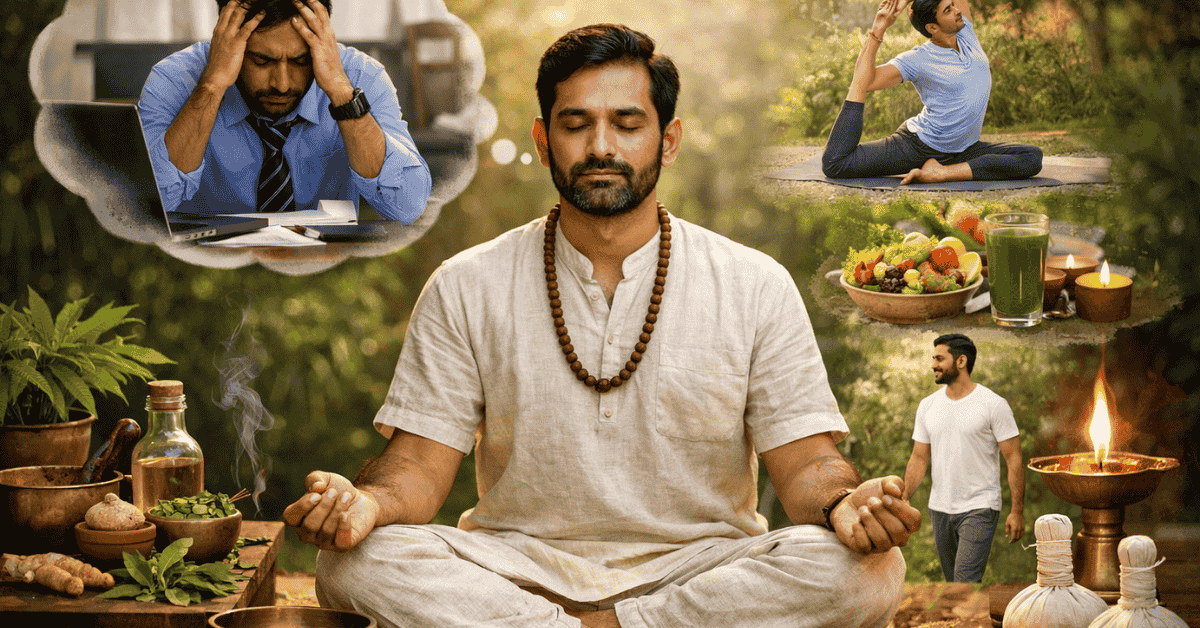
Situational stress is a mental barrier that often disrupts physical wellbeing and confidence. This guide offers a dual-action approach: addressing the mind’s psychological barriers alongside physical support. By combining nerve-soothing herbs like Brahmi with grounding lifestyle practices and breathwork, men can quiet internal "noise" and reclaim their natural poise and vitality.
Key takeaways
- The stress circuit: Anxiety triggers the "fight or flight" response, which physically constricts the relaxation needed for healthy internal function.
- Vata balance: In Ayurveda, situational stress is primarily an imbalance of the "Vata" (air) element, leading to a racing mind and erratic energy.
- Medhya Rasayanas: Specific "brain-tonic" herbs help nourish the nervous system, allowing for focus and calm.
- Nasal therapy (Nasya): This ancient practice helps deliver calming herbal properties directly to the nervous system.
- Consistent grounding: Overcoming deep-seated mental blocks typically requires 4 to 12 weeks of consistent lifestyle grounding and self-compassion.
You are not alone: The mental weight of stress
I want to speak directly to the man who is currently sitting with a heavy heart, wondering why his body isn't "cooperating" during moments of connection. Maybe it happened once, and now the fear of it happening again is all you can think about.
Performance-related anxiety is a common yet least discussed challenge. We live in a society that puts immense pressure on us to be "perfect," and when that pressure enters our personal lives, it creates a mental wall. This isn't a lack of strength; it is a "glitch" in the nervous system. Your mind is trying to protect you from a perceived threat, but in doing so, it shuts down the very relaxation your body needs.
The ayurvedic perspective: Why the mind overrides the body
Ayurveda describes the mind as being governed by three qualities: Sattva (clarity), Rajas (activity), and Tamas (inertia). Situational stress is often a state of "High Rajas"—the mind is racing and filled with worry.
-
The Vata connection: Anxiety is primarily a Vata (Air) issue. When the "wind" in the mind is too strong, it causes erratic movement and "shaky" vitality.
-
The adrenaline trap: When you feel anxious, your brain releases adrenaline. While great for handling a crisis, it is the enemy of calm connection. Adrenaline narrows the blood vessels and keeps the heart rate too high.
Step-by-step solutions to manage situational stress
-
Calm the master control: Herbs like Brahmi and Shankhpushpi specifically nourish the brain, reducing the "background noise" of anxiety. Nasya (applying two drops of warm sesame oil in each nostril) is an ancient way to deliver calming properties directly to the nervous system.
-
Physical grounding: A full-body massage (Abhyanga) with warm oil is the most effective way to lower Vata. Gently massaging the soles of the feet helps move energy downward, away from the overactive brain.
-
Breath as your manual override: The fastest way to stop an anxiety spike is through the breath. Practice Equal Breathing: Inhale for 4 seconds, hold for 4, exhale for 4, and hold for 4. This tells your nervous system that you are safe.
Common misconceptions about stress and vitality
|
The myth |
The ayurvedic fact |
|
"You just need a stronger physical supplement." |
Software vs. Hardware: If the root is mental stress, you must address the "software" (the mind) before the body can respond. |
|
"Alcohol helps you relax for better connection." |
The False Friend: Alcohol is a depressant that interferes with the physical signals needed for natural vitality. |
|
"Only weak men experience situational stress." |
The High-Achiever Trap: This is most common in high-achieving men who are used to being in control of everything except their own relaxation. |
When to consult a professional
Seek expert advice immediately if:
- Chest pain: If anxiety is accompanied by chest tightness or pain radiating down the arm.
- Severe dental pain: If you have a throbbing toothache or jaw swelling. Chronic oral inflammation increases systemic stress, making your nervous system more "twitchy."
- Clinical depression: If stress is part of a larger pattern where you no longer find joy in daily activities.